Cash Balance Plans for Business Owners
Six-figure tax deductions, complex deadlines, and one shot per year to get the math right. Here's how the plan works and who it actually fits.
Get the deadline checklist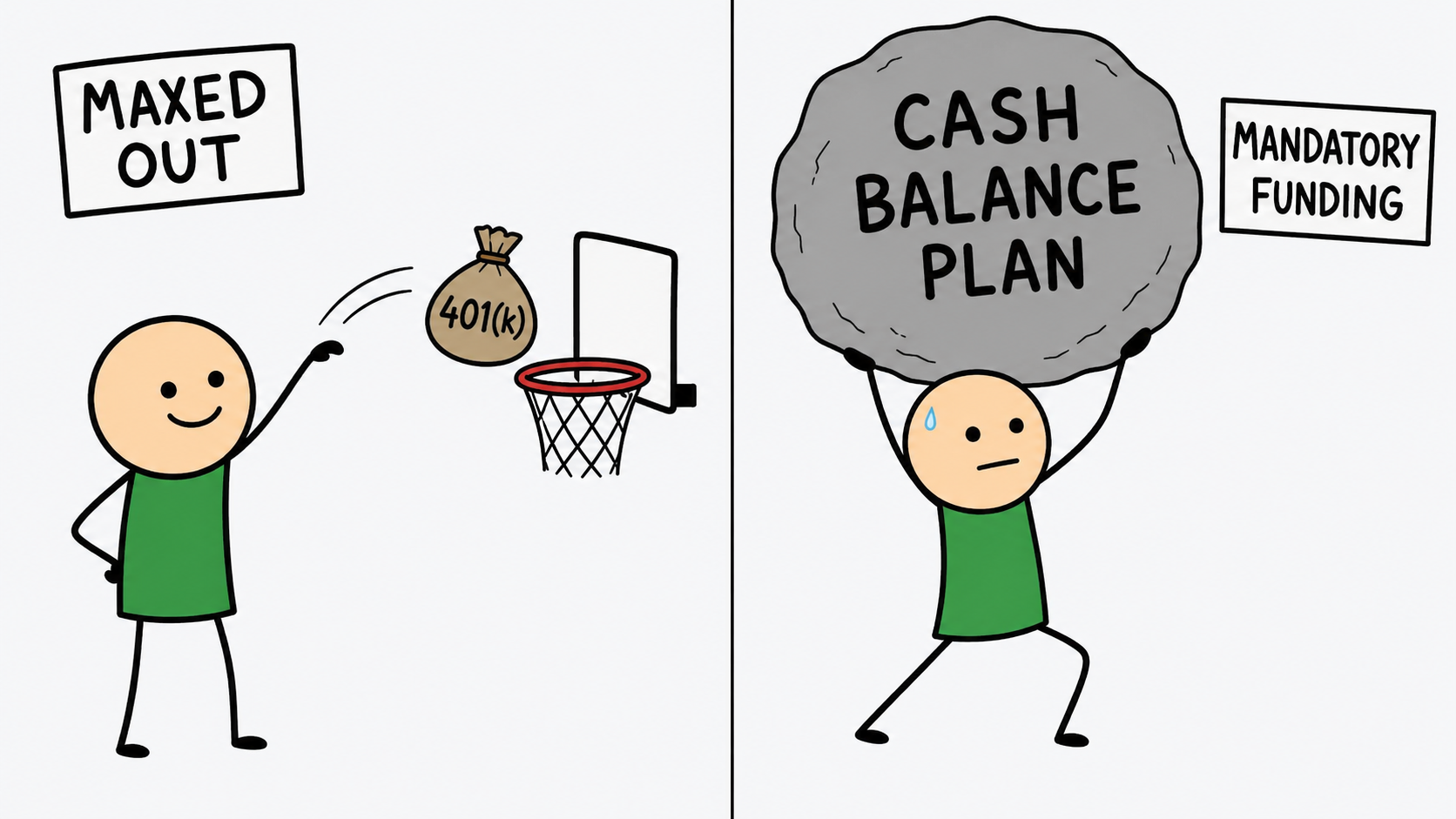
A cash balance plan is a defined benefit plan that gives each participant a hypothetical account balance. The plan promises a future benefit based on annual pay credits and interest credits set in the plan document. The employer is on the hook for funding that promised benefit. Participants don't pick investments and don't see market gains or losses inside their balance.
The reason business owners care is the contribution math. A 401(k) plus profit sharing combo tops out at the IRS annual additions limit per person. A cash balance plan sits on top of that. Pay credits for older owners can run into six figures because the contribution is calculated to fund a future benefit, and the closer the owner is to retirement age, the larger the annual contribution required to get there. Contributions are deductible in the year they're made, and the limits don't compete with the 401(k) limits.
The plan stays running once started. The contribution is required every year until the plan is frozen or terminated. That's the trade for the deduction size. Owners who run the math, fund on time, and stay inside the deduction rules end up with retirement balances that grow at a pace a 401(k) alone can't touch.
Who Benefits Most
Cash balance plans favor older owners with stable income near the IRS compensation cap. The math is brutal on younger owners with lumpy revenue.
Strong fit
Owner over 50, drawing W-2 wages near the IRS compensation cap, with predictable revenue and at least five to ten years before retirement. Six-figure pay credits become realistic and the deduction justifies the overhead.
Possible fit
Owner ages 45 to 50, with stable but growing income, evaluating whether the runway is long enough to make the contribution math pencil out. Often a wait-or-start decision.
Likely poor fit
Owner under 40, or income that swings widely year to year, or a business in growth mode where required annual funding would strain cash flow. Solo 401(k) or SEP IRA usually serves better.
Not sure if a cash balance plan fits your business?
Answer six questions about your business and get a personalized recommendation across five retirement plans.
The Four Deadlines That Decide the Deduction
Cash balance plans run on four separate clocks. Missing any one costs money in a different way.
| Deadline | What Happens if Missed |
|---|---|
| Plan adoption | Plan can't apply to the prior year. Deduction window for that year is closed. |
| Funding (8.5 months after plan year-end) | Section 4971 excise tax starts at 10% of unpaid contribution, climbing to 100% if uncorrected. |
| Deduction (tax filing deadline including extensions) | Deduction shifts to the following tax year, even if funding obligation is met. |
| Form 5500 (7 months after plan year-end, plus optional extension) | Per-day IRS and DOL penalties accrue until the form is filed. |
Get the Cash Balance Deadline Checklist
A one-page reference covering the four deadlines, what happens if you miss them, and the action items that keep the deduction intact. Free.
One email per submission. No spam, no list sales, unsubscribe anytime.